Last Updated: August 2026
When most people think of creatine, they picture bigger muscles, heavier lifts, and improved athletic performance.
That's understandable. Creatine has earned its reputation as one of the most researched and effective sports nutrition ingredients ever studied.
But over the past decade, another story has quietly emerged.
Scientists are discovering that creatine doesn't just support your muscles. It also plays a critical role in helping your brain produce energy.
That has sparked growing interest among researchers studying memory, focus, reaction time, mental fatigue, concussion recovery, healthy aging, sleep deprivation, and cognitive performance.
Today, creatine is no longer viewed simply as a gym supplement. It is increasingly recognized as one of the most promising nutrients for supporting both physical and mental performance.
If you're wondering whether creatine can help your brain, what the science actually says, and how to choose the best creatine supplement, this guide covers everything you need to know.
Table of Contents
- What is creatine?
- Why your brain needs creatine
- Does creatine improve memory and focus?
- What the latest research shows
- Who benefits most from creatine?
- Why athletes may need creatine for their brain
- How to choose the best creatine supplement
- Frequently Asked Questions
What Is Creatine?
Creatine is a naturally occurring compound made from three amino acids:
- Arginine
- Glycine
- Methionine
Your body produces about one gram of creatine each day, primarily in the liver and kidneys. You also obtain creatine through foods such as beef, pork, fish, and seafood.
Once produced or consumed, approximately 95% of creatine is stored in skeletal muscle. The remaining amount is distributed throughout other tissues with high energy demands, including the brain, heart, and nervous system.
This is an important point that many people overlook.
Your brain is one of the most energy-demanding organs in your body. Although it accounts for only about 2% of your body weight, it consumes roughly 20% of your body's total energy.
Every thought, memory, reaction, and decision depends on a constant supply of cellular energy.
Creatine helps maintain that supply.
Why Does Your Brain Need Creatine?
Every cell in your brain runs on a molecule called ATP (adenosine triphosphate).
Think of ATP as the body's energy currency.
The problem is that ATP is constantly being used and must be regenerated every few seconds.
This is where creatine becomes essential.
Creatine is stored as phosphocreatine inside cells. When energy demands increase, phosphocreatine rapidly donates a phosphate group to regenerate ATP, allowing brain cells to continue functioning efficiently.
In simple terms, creatine acts like an emergency energy reserve for your brain.
This becomes particularly important during periods of:
- intense concentration
- prolonged studying
- demanding athletic competition
- sleep deprivation
- mental fatigue
- stress
- neurological recovery
Researchers believe that maintaining adequate brain creatine stores may help support cognitive performance when the brain is under increased energy demand.
What Does the Research Say About Creatine and Brain Health?
Unlike many supplements marketed for brain health, creatine has been studied for decades.
Researchers have investigated its potential role in:
- Cognitive performance
- Memory
- Executive function
- Mental fatigue
- Sleep deprivation
- Aging
- Depression
- Concussion recovery
- Neurodegenerative diseases
Although research is ongoing, the evidence continues to grow.
Rather than acting as a stimulant, creatine appears to improve the brain's ability to produce and recycle energy.
That distinction matters.
Instead of temporarily increasing alertness like caffeine, creatine may help support the brain's underlying energy systems.
This makes it fundamentally different from many traditional "focus supplements."
Can Creatine Improve Memory?
One of the most exciting areas of research is memory.
Several controlled studies have found improvements in aspects of short-term memory and working memory, particularly in individuals experiencing increased cognitive demand.
Working memory allows you to temporarily hold and manipulate information.
It's what helps you:
- remember instructions
- solve problems
- learn new information
- make rapid decisions
- perform under pressure
These abilities are essential not only for students and professionals, but also for athletes making split-second decisions during competition.
While results vary between studies, researchers generally agree that creatine appears most beneficial when the brain is under stress or energy demand.
Does Creatine Improve Focus?
The answer is more nuanced than many supplement advertisements suggest.
Creatine is not a stimulant.
You shouldn't expect the immediate sensation that comes from caffeine or other stimulants.
Instead, creatine appears to support sustained cognitive performance by improving the availability of cellular energy.
Many researchers believe this may help individuals maintain mental performance during long periods of demanding work.
This distinction is important because focus isn't always about becoming more alert.
Sometimes it's about avoiding mental fatigue.
Creatine may help support that resilience.
Creatine and Mental Fatigue
Mental fatigue affects nearly everyone.
Athletes experience it late in games.
Students experience it during exams.
Professionals experience it during long workdays.
Parents experience it after interrupted sleep.
One of the most consistent findings in creatine research is its ability to help reduce the negative effects of mentally demanding situations.
Studies involving sleep deprivation, prolonged cognitive testing, and stressful environments suggest creatine supplementation may help preserve aspects of cognitive performance when energy availability becomes limited.
That doesn't mean creatine eliminates fatigue.
It means your brain may be better equipped to maintain performance when challenged.
Why Athletes May Benefit Even More
This is where the conversation becomes especially interesting.
Athletes place extraordinary demands on both their bodies and their brains.
Every practice, game, and training session requires constant decision-making, reaction time, attention, emotional regulation, and motor coordination.
In contact sports, the brain may also experience repeated impacts over the course of a season.
While creatine has traditionally been used to improve strength and power, researchers are increasingly exploring whether optimizing brain creatine stores may also support cognitive performance, resilience, and recovery in athletes.
This emerging area of research aligns with a growing recognition that athletic performance depends just as much on the brain as it does on muscles.
For athletes, protecting and supporting brain health isn't just about long-term wellness.
It may also influence performance today.
Which Type of Creatine Is Best for Brain Health?
If you've searched for creatine online, you've probably come across dozens of different forms:
- Creatine Monohydrate
- Creatine Hydrochloride (HCl)
- Buffered Creatine
- Creatine Nitrate
- Kre-Alkalyn®
- Creatine Magnesium Chelate
- Micronized Creatine
- Creatine Gummies
- Liquid Creatine
It can quickly become confusing.
Fortunately, the answer is much simpler than the marketing would suggest.
Creatine Monohydrate Remains the Gold Standard
Despite the growing number of specialty forms, creatine monohydrate remains the most researched, most effective, and most recommended form of creatine for both physical and cognitive performance.
In fact, the overwhelming majority of scientific studies investigating creatine and brain health have used creatine monohydrate.
That matters.
When choosing a supplement, it's generally wise to choose the form that has actually been studied, rather than the one with the biggest marketing claims.
Micronized creatine monohydrate may dissolve more easily in water, but once absorbed, it functions the same as standard creatine monohydrate.
At this time, there is no convincing evidence that newer forms of creatine provide superior cognitive benefits.
How Much Creatine Should You Take?
For most healthy adults, research consistently supports a daily intake of 3 to 5 grams of creatine monohydrate.
Many early studies used a loading phase of approximately 20 grams per day for five to seven days, followed by a maintenance dose.
While loading can increase muscle creatine stores more quickly, it is not necessary for most people.
Taking 3 to 5 grams every day will gradually increase creatine stores over several weeks and is the approach most experts recommend.
Consistency is far more important than timing.
Whether you take creatine in the morning, afternoon, or evening matters much less than taking it every day.
How Long Does Creatine Take to Work?
Unlike caffeine, creatine doesn't produce an immediate effect.
Instead, it works by gradually increasing creatine stores within your muscles and brain.
Many people begin noticing improvements in training performance within two to four weeks of consistent supplementation.
Potential cognitive benefits may also require several weeks of daily use, depending on your baseline creatine levels and individual physiology.
Think of creatine as a long-term investment rather than a quick fix.
Who May Benefit the Most from Creatine?
While creatine can support many healthy adults, research suggests some individuals may benefit even more.
These include:
Athletes
Athletes place enormous demands on both their muscles and their brains.
Supporting healthy energy metabolism may benefit both physical and cognitive performance.
Students
Long study sessions require sustained attention, learning, and memory.
Because creatine supports cellular energy production, researchers continue to investigate its role during periods of intensive learning.
Shift Workers
Sleep disruption can significantly impair cognitive performance.
Several studies suggest creatine may help maintain aspects of mental performance during periods of sleep deprivation.
Older Adults
As we age, maintaining muscle mass, strength, and cognitive function becomes increasingly important.
Creatine has become one of the most widely studied supplements in healthy aging research.
Vegetarians and Vegans
Dietary creatine comes primarily from meat and fish.
Individuals following vegetarian or vegan diets often have lower baseline creatine stores, meaning supplementation may produce larger increases in creatine availability.
Is Creatine Safe?
Creatine is one of the most extensively studied supplements in sports nutrition.
Hundreds of clinical studies have evaluated its safety across a wide range of populations.
When taken as directed, creatine monohydrate has consistently demonstrated an excellent safety profile in healthy individuals.
Common myths have suggested creatine may damage the kidneys, cause dehydration, or increase the risk of muscle cramps.
However, decades of research have not supported these claims in healthy people using recommended doses.
As with any supplement, individuals with existing kidney disease or other medical conditions should consult their healthcare provider before beginning supplementation.
Creatine vs Popular Brain Supplements
| Ingredient | Brain Energy | Focus | Memory | Long-Term Brain Support | Human Evidence |
|---|---|---|---|---|---|
| Creatine Monohydrate | ★★★★★ | ★★★★☆ | ★★★★☆ | ★★★★★ | Excellent |
| Citicoline | ★★★☆☆ | ★★★★☆ | ★★★★☆ | ★★★★☆ | Strong |
| Lion's Mane | ★★☆☆☆ | ★★★☆☆ | ★★★☆☆ | ★★★★☆ | Emerging |
| L-Tyrosine | ★★★☆☆ | ★★★★☆ | ★★☆☆☆ | ★★☆☆☆ | Moderate |
| Omega-3 DHA | ★★★★☆ | ★★★☆☆ | ★★★★☆ | ★★★★★ | Excellent |
| Caffeine | ★☆☆☆☆ | ★★★★★ | ★★☆☆☆ | ★☆☆☆☆ | Excellent |
| Paraxanthine | ★★☆☆☆ | ★★★★☆ | ★★★☆☆ | ★★☆☆☆ | Emerging |
No single ingredient does everything.
Each works through different biological pathways.
That is why many modern brain health formulations combine complementary ingredients rather than relying on a single nutrient alone.
Why Headstrong Takes a Different Approach
Creatine is an excellent place to start.
It is not the best place to stop.
Your brain relies on far more than one nutrient to support focus, resilience, recovery, and long-term cognitive performance.
That's why we created Headstrong.
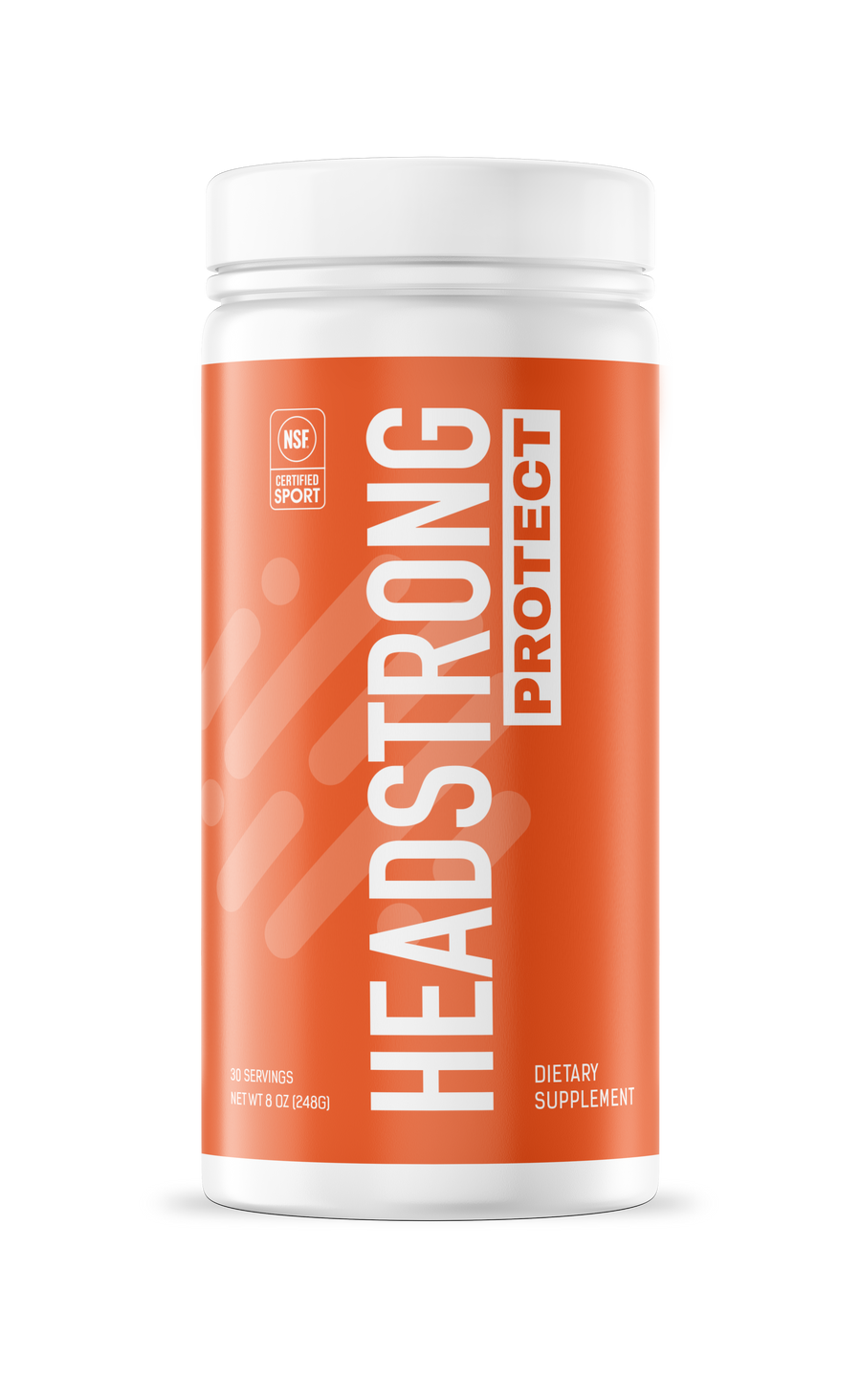
Headstrong combines 5 grams of creatine monohydrate with a carefully selected blend of complementary ingredients, including:
- N-Acetyl Cysteine (NAC)
- Lion's Mane Mushroom
- Ashwagandha
- L-Tyrosine
Together, these ingredients were chosen to support multiple aspects of brain health, cognitive performance, and recovery rather than relying on creatine alone.
Every serving is formulated with athlete safety and quality in mind.
NSF Certified for Sport®
Headstrong is NSF Certified for Sport®, meaning every batch is independently tested for quality, purity, and substances banned in sport.
Whether you're an elite athlete, collegiate competitor, or simply someone who values transparency, this certification provides an additional level of confidence.
Trusted by More Than 1,000 Customers
Headstrong has earned more than 1,000 verified 5-star reviews from athletes, parents, coaches, healthcare professionals, and high performers.
While no supplement works the same for everyone, those reviews consistently highlight improvements in:
- Mental clarity
- Daily focus
- Consistency
- Training performance
- Recovery
- Overall well-being
Our mission has always been simple.
Build science-based sports nutrition that helps people protect and perform with their most important asset.
Their brain.
Final Thoughts
Creatine has evolved far beyond its reputation as simply a muscle-building supplement.
Today's research suggests it plays a critical role in cellular energy production throughout the body, including the brain.
While scientists continue to explore its full potential, the evidence supporting creatine for cognitive performance, mental fatigue, and brain health continues to grow.
If you're looking for the best creatine for brain health, start with a product that uses 3 to 5 grams of creatine monohydrate, is manufactured to the highest quality standards, and, ideally, combines complementary ingredients that support multiple aspects of brain function.
Your muscles may notice the difference.
Your brain just might, too.
Ready to Support Your Brain Every Day?
Headstrong was built around one simple idea.
Your brain deserves the same attention you've always given your muscles.
With 5 grams of creatine monohydrate, complementary brain-supporting ingredients, and NSF Certified for Sport®certification, Headstrong is designed for athletes and high performers who want to train, compete, recover, and think at their best.
Explore Headstrong and join more than 1,000 customers who have rated it 5 stars.
Key Takeaways
If you only remember five things from this article, make them these:
- Creatine is one of the most researched supplements available, with decades of evidence supporting its safety and effectiveness.
- Your brain requires enormous amounts of energy, and creatine helps regenerate ATP, the molecule that powers every brain cell.
- Creatine monohydrate remains the gold standard and is the form used in the vast majority of brain health research.
- The strongest evidence suggests creatine may help support memory, mental fatigue, and cognitive performance, particularly during periods of increased energy demand such as intense training, prolonged concentration, or sleep deprivation.
- For most healthy adults, 3 to 5 grams of creatine monohydrate daily is the evidence-based recommendation.
Frequently Asked Questions
Is creatine good for brain health?
Yes. Research suggests creatine supports cellular energy production in the brain by helping regenerate ATP. While it is best known for improving physical performance, studies increasingly show potential benefits for memory, cognitive performance, and mental fatigue, particularly during periods of increased energy demand.
What is the best creatine for brain health?
Creatine monohydrate remains the most researched and widely recommended form. Nearly all clinical studies investigating cognitive benefits have used creatine monohydrate, making it the current gold standard.
Does creatine improve memory?
Several studies have reported improvements in aspects of working memory and short-term memory, particularly in individuals experiencing sleep deprivation, demanding cognitive tasks, or lower baseline creatine levels. Results vary between individuals, and research is ongoing.
Does creatine help with focus?
Creatine does not work like caffeine. Instead of providing a temporary stimulant effect, it supports the brain's energy systems, which may help maintain focus and cognitive performance during mentally demanding situations.
Can creatine reduce brain fog?
Brain fog has many potential causes, including poor sleep, stress, nutritional deficiencies, illness, and mental fatigue. Creatine is not a treatment for brain fog, but supporting healthy brain energy metabolism may help some individuals maintain mental clarity during periods of increased cognitive demand.
Is creatine safe to take every day?
For healthy adults, creatine monohydrate has demonstrated an excellent safety profile when taken at recommended doses. It is one of the most extensively studied ingredients in sports nutrition. Individuals with kidney disease or other medical conditions should consult a healthcare professional before beginning supplementation.
How much creatine should I take for brain health?
Current evidence supports 3 to 5 grams of creatine monohydrate daily for most healthy adults. Consistency is more important than timing.
Should I load creatine?
A loading phase is not required. Taking 3 to 5 grams every day will gradually increase creatine stores over several weeks.
How long does creatine take to work?
Benefits for physical performance often become noticeable within two to four weeks of consistent supplementation. Potential cognitive benefits may also take several weeks as creatine stores increase.
Is creatine only for athletes?
No. Although athletes were among the first groups to use creatine, researchers have also studied its role in healthy aging, cognitive performance, sleep deprivation, and general wellness.
Does creatine help after poor sleep?
Some research suggests creatine may help preserve aspects of cognitive performance during periods of sleep deprivation by supporting cellular energy production. However, it should not be viewed as a substitute for adequate sleep.
Can women take creatine?
Absolutely. Creatine is safe and effective for both women and men. Emerging research suggests women may particularly benefit from creatine during periods of hormonal change, aging, and increased cognitive demand.
Can teenagers take creatine?
Research supports the safe use of creatine in many adolescent athletes when used appropriately under the guidance of a healthcare professional and alongside a well-balanced diet and training program. Parents should discuss supplementation with their child's healthcare provider before starting any new supplement.
Should I take creatine before or after exercise?
Current evidence suggests daily consistency matters far more than timing. Taking creatine at the same time each day is an effective approach for most people.
Why does Headstrong include more than just creatine?
While creatine provides a strong foundation for supporting brain energy metabolism, brain health involves multiple biological pathways. Headstrong combines 5 grams of creatine monohydrate with complementary ingredients selected to support focus, resilience, and cognitive performance. It is also NSF Certified for Sport® and trusted by more than 1,000 customers who have left verified 5-star reviews.
Scientific References
The following peer-reviewed publications informed this article and provide additional reading for those interested in the science of creatine and brain health.
- Kreider RB, et al. International Society of Sports Nutrition Position Stand: Safety and Efficacy of Creatine Supplementation in Exercise, Sport, and Medicine. Journal of the International Society of Sports Nutrition. 2022.
- Dolan E, Gualano B, Rawson ES. Beyond Muscle: The Emerging Role of Creatine in Brain Health and Cognitive Function. Nutrients.
- Avgerinos KI, et al. Effects of Creatine Supplementation on Cognitive Function: A Systematic Review and Meta-analysis. Experimental Gerontology.
- Rae C, et al. Oral Creatine Monohydrate Supplementation Improves Brain Performance. Proceedings of the Royal Society B.
- Rawson ES, Venezia AC. Use of Creatine in the Elderly and Evidence for Effects on Cognitive Function. Amino Acids.
- Persky AM, Brazeau GA. Clinical Pharmacology of the Dietary Supplement Creatine Monohydrate. Pharmacological Reviews.
About the Author
Dr. Darren Burke, PhD
Dr. Darren Burke is a scientist, entrepreneur, and co-founder of Headstrong. He holds a PhD in Sport and Exercise Science and has spent more than two decades studying sports nutrition, performance, and human physiology. His work has helped shape products used by elite athletes around the world, with a focus on translating science into practical strategies that support both performance and long-term brain health.
Related Articles
Continue learning with these evidence-based resources:
- Best Brain Supplements for Athletes (2026): Complete Comparison Guide
- Brain Fog in Athletes: Causes, Symptoms & Science-Based Solutions
- Best Nootropics for Athletes (2026): What the Science Says
- How Sleep Impacts Athletic Performance and Brain Recovery
- Why Brain Health Is the Next Frontier in Sports Nutrition