If you’re an athlete in contact or high-impact sports, you know your brain is working as hard as your body. Between intense training sessions, competition, and the demands of your sport, many athletes explore ways to support focus, mental clarity, and cognitive resilience.
Reviewed by Dr. Darren Burke, PhD, exercise physiologist and co-founder of Headstrong. Last updated November 21, 2026.
Key takeaways
- Creatine supports brain energy metabolism, which matters most when the brain is under high demand.
- Research links creatine to better cognitive performance under stress, sleep loss and mental fatigue.
- Creatine monohydrate at 3 to 5 grams a day is the best-studied option for adults.
- A single ingredient is a starting point. Functional formulations combine ingredients that work together.

One ingredient receiving growing attention in sports nutrition research is creatine. While no supplement replaces proper training, recovery or sleep, emerging research has explored creatine’s role in supporting brain energy metabolism and cognitive performance.
Here’s what the current science says, and how Headstrong designed its formulations with athletes in mind.
Why brain energy matters for competitive athletes
Athletic performance isn’t just physical. Split-second decision making, reaction time, focus under fatigue, and mental resilience often separate good athletes from great ones.
The brain uses a significant amount of energy, primarily in the form of ATP. During high-intensity training or competition, brain energy demands can increase. Creatine plays a key role in the phosphocreatine system, helping rapidly regenerate ATP in both muscle and brain tissue.
Because the brain has its own creatine transport mechanisms, researchers have investigated whether higher creatine levels may support cognitive function when the brain is under stress, such as during sleep deprivation, mental fatigue, or intense exercise.
What the research says about creatine and cognitive support
Multiple studies have examined creatine supplementation in active populations:
- Creatine can increase brain creatine levels, though the response can vary between individuals and may require consistent daily use over several weeks.
- Some research has looked at cognitive tasks involving memory, processing speed, and mental fatigue. Benefits appear more noticeable under demanding conditions (for example, after intense training or when fatigued).
- A number of reviews and trials have explored creatine in athletes and active adults, with findings suggesting potential support for aspects of cognitive performance and reduced mental fatigue in certain contexts.
- Dosing for brain-related outcomes in research often involves 5 g per day or higher loading phases, though individual responses differ. More long-term studies are still needed.
Importantly, results are not universal: genetics, baseline diet, and training status all play a role. Creatine is widely considered safe for healthy adults when used as directed, and it remains one of the most researched supplements in sports nutrition.
Why a single-ingredient approach may not be enough for athletes
Many athletes start with plain creatine monohydrate for muscle performance. That works for strength and power, but cognitive performance depends on more than one pathway. A functional formulation combines several ingredients that each support a different part of the picture:
- Creatine monohydrate: supports brain energy metabolism.
- Lion’s Mane mushroom: studied for its potential role in supporting nerve growth factor and neuroplasticity.
- NAC (N-Acetyl Cysteine): a precursor to glutathione, involved in antioxidant support.
- Ashwagandha: traditionally used to help the body adapt to stress.
- L-Tyrosine: an amino acid involved in neurotransmitter production, particularly under stressful conditions.
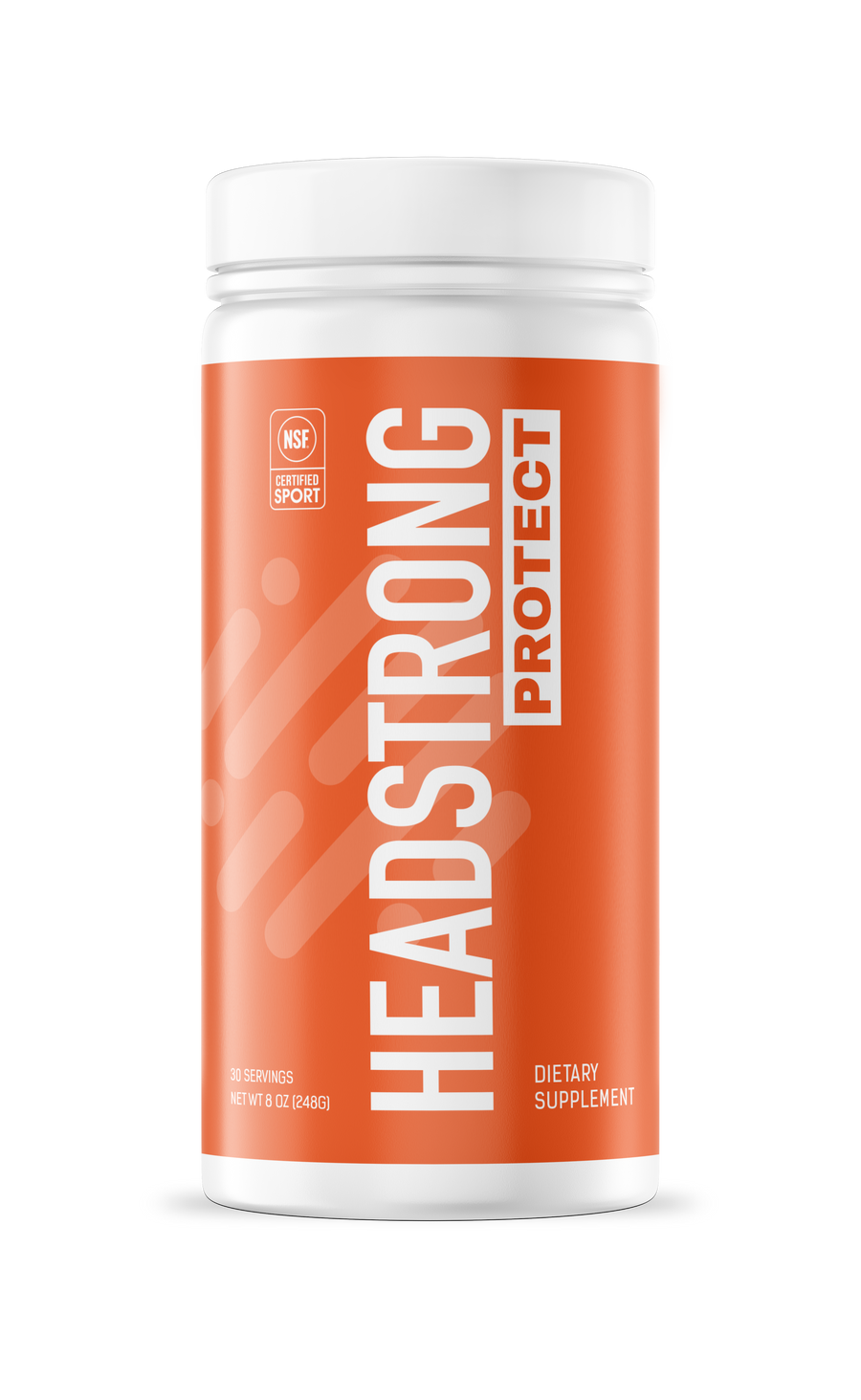
Headstrong PROTECT brings these together in one daily scoop. It is a functional formulation where the ingredients work together, built for athletes who want to support both their physical training and their cognitive demands.
What makes Headstrong different
- NSF Certified for Sport®: every batch is tested for banned substances, giving athletes and coaches confidence for competitive use.
- Athlete-focused formulation: developed with input from athletes who understand the real demands of contact and high-impact sports.
- Daily brain-first nutrition: stimulant-free and not a pre-workout. It is meant for consistent daily use as part of your overall training and recovery routine.
Practical tips for athletes considering creatine
- Consistency matters: take it daily rather than only on training days for best results on brain creatine saturation.
- Stay hydrated: creatine draws water into cells, and proper hydration supports both performance and comfort.
- Pair with fundamentals: prioritize sleep, balanced nutrition, and sport-specific recovery.
- Timing: many athletes mix it into a post-training shake or morning smoothie.
Frequently asked questions
Is creatine safe for athletes? Creatine monohydrate is one of the most studied supplements and is generally recognized as safe for healthy adults at standard doses. Always choose products tested for purity, such as those with NSF Certified for Sport certification.
Can women athletes benefit from creatine? Yes. Research shows cognitive and physical benefits in both men and women. Individual responses may vary.
How does Headstrong PROTECT compare to plain creatine? Plain creatine is a single ingredient. Headstrong PROTECT is a functional formulation of five ingredients, including creatine monohydrate, chosen to work together for focus, brain energy and stress support.
When might I notice effects? Some people report improved training capacity within weeks. Cognitive effects, when they occur, are often subtle and build with consistent use.
Ready to fuel your brain and body?
If you’re serious about supporting your performance today and over a long career, Headstrong PROTECT is a convenient, NSF Certified for Sport daily formulation used by pro athletes. Free shipping on every order.
Shop Headstrong PROTECT
Keep reading
- 5 Science-Based Performance Ingredients. One Scoop.
- Best Nootropics for Athletes (2026)
- What Does NSF Certified for Sport Actually Mean?
- Dr. Darren Burke on Brain-First Performance: What Pro Athletes Taught Me About Focus, Energy and Recovery
This article is for informational and educational purposes only and is not medical advice. Dietary supplements are not intended to diagnose, treat, cure, or prevent any disease. Consult a qualified healthcare professional before starting any new supplement, especially if you are under medical care.